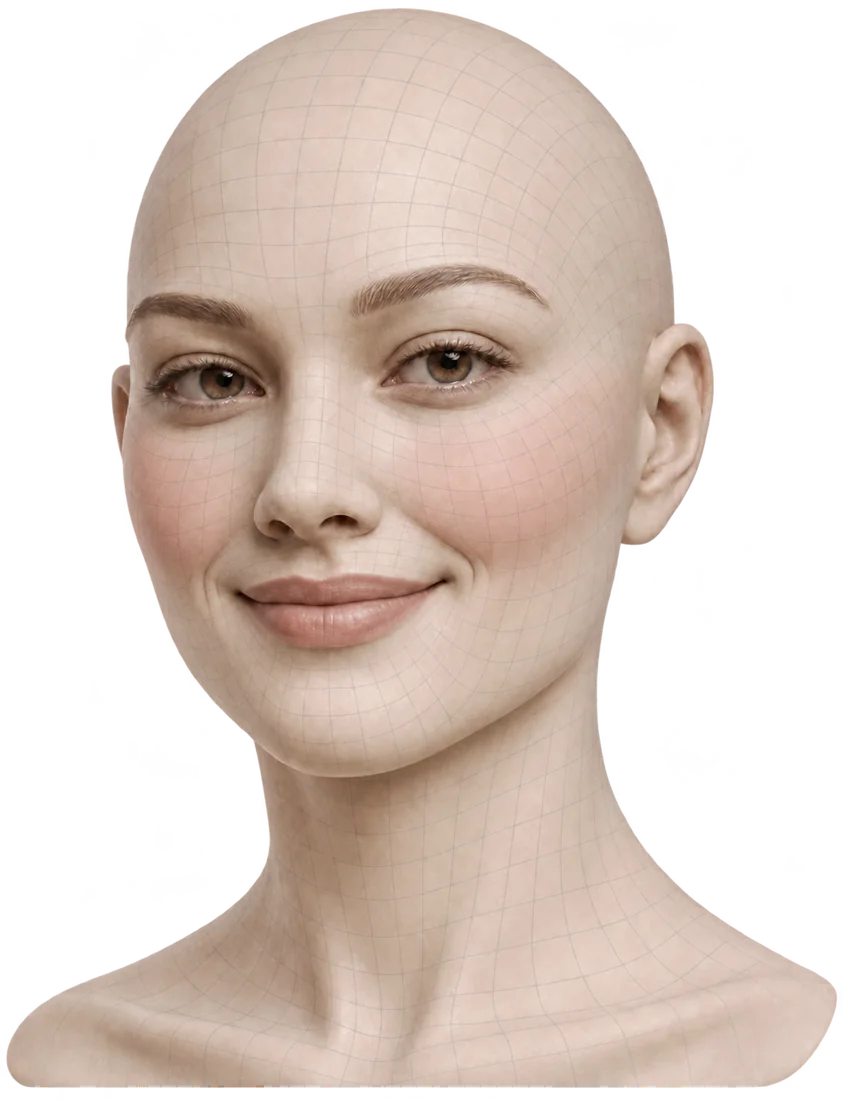
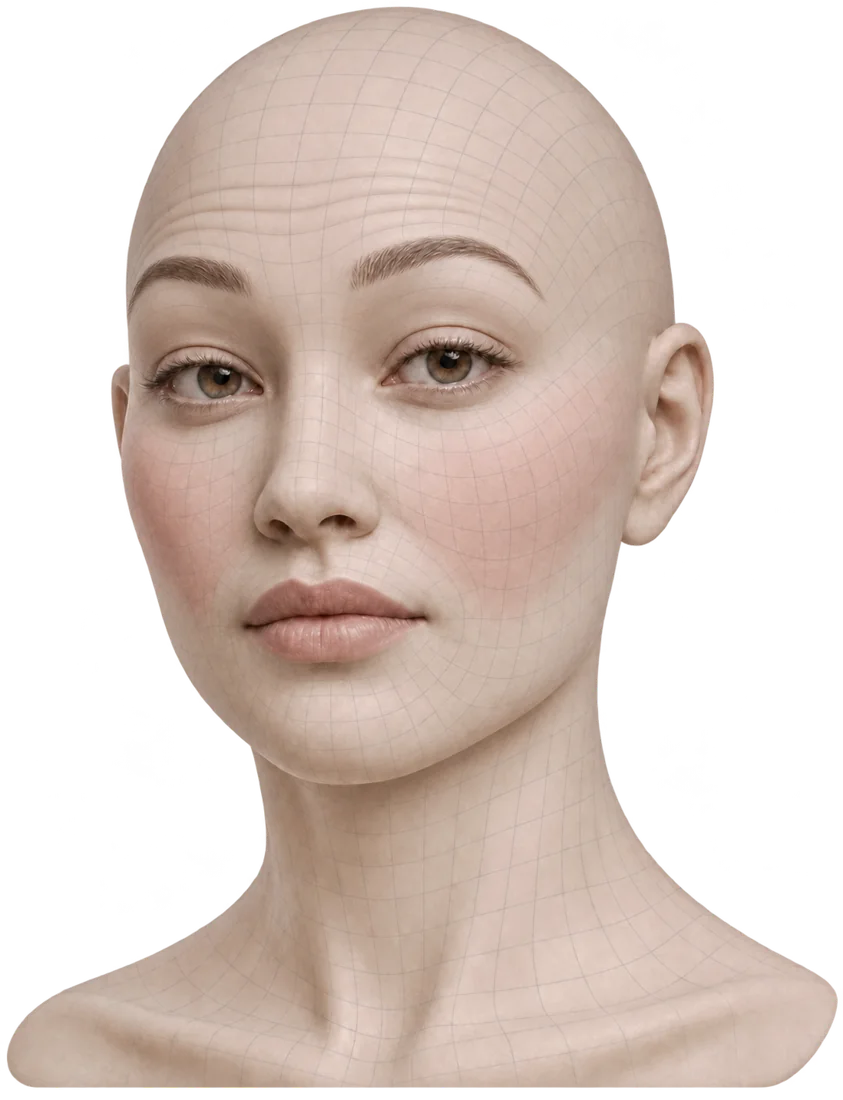
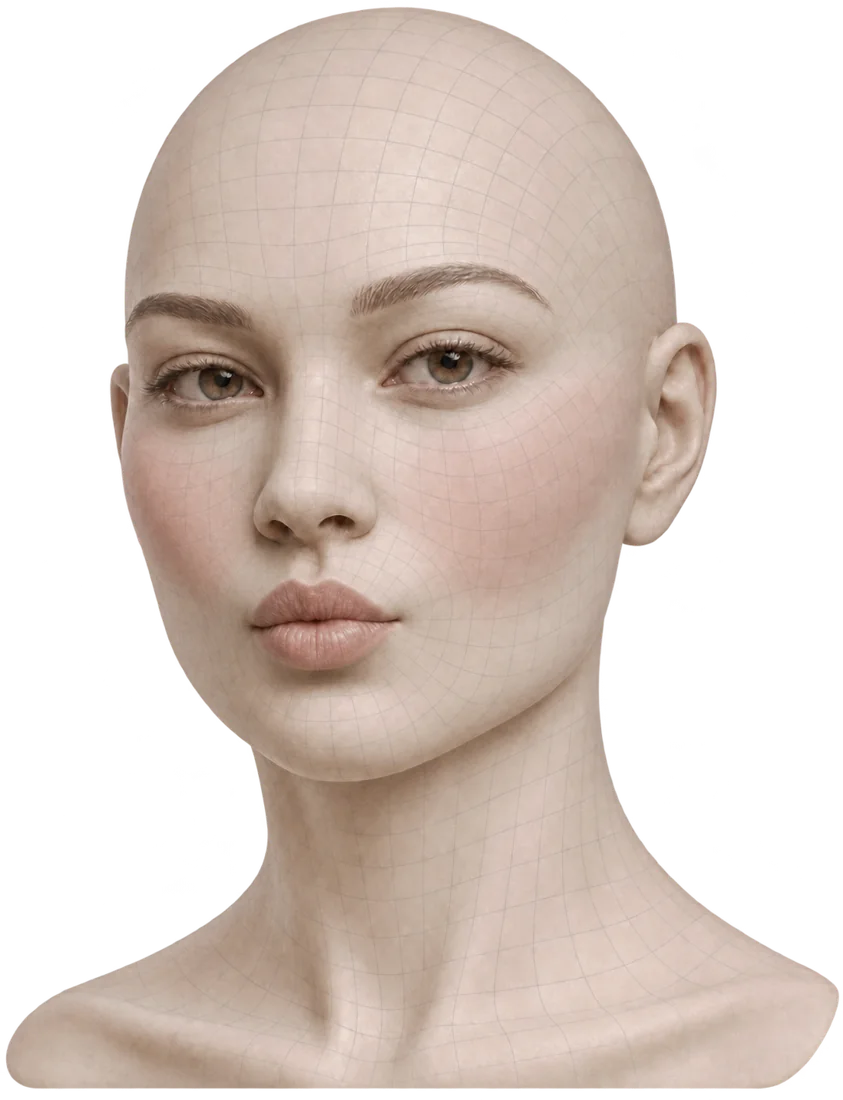
The goal is movement awareness
Notice a small smile beginning at the mouth corners and returning to rest. The zygomaticus major helps draw the corner upward and outward; a smile involves other muscles too. The rose area is an illustrative teaching cue, not a muscle boundary or measurement of your face.
Why these phases
This browser lesson uses 4 seconds to settle, 4 seconds for a small comfortable smile, 4 seconds to soften and 8 seconds at rest. One 20-second cycle gives you time to read each cue and notice the return. These are authored interface timings, not a clinically validated dose or cosmetic programme. There is no forceful hold, resistance or jaw clenching.
Before you begin
Keep your teeth comfortably apart and breathe normally. Use a small, easy range; do not pull the skin or push with your hands. Stop if movement causes pain, dizziness or jaw discomfort. If you have a facial or jaw condition or are recovering from a procedure, use the explanation only until your treating clinician advises you.
Repetition and progression
The lesson ends after one cycle. We do not prescribe a daily frequency or progression. Return if it helps you understand the cue; more time or effort is not the goal. Useful progress here means recognising the action, using less unnecessary effort and knowing when to pause. No appearance change is promised.
What your record means
We save timer activity on this browser when storage is available. A completed timer is not proof you exercised. You can mark that you followed along yourself and add a short reflection. A stopped or interrupted session remains distinct. Your Practice Journal is local to this browser; there is no account sync.
Read the movement explanation, evidence and timing notes or phone setup guide.


